
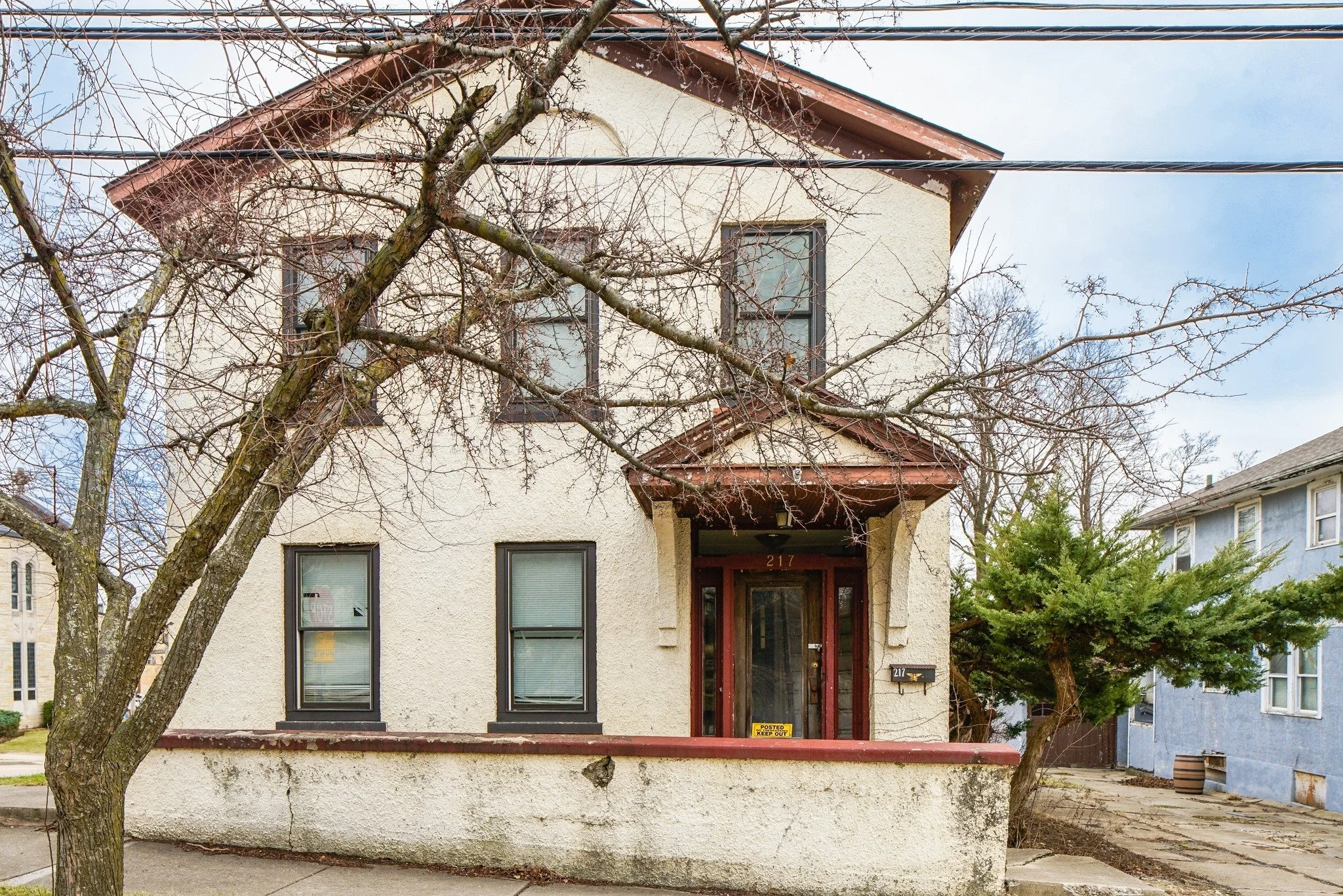
Figure 1. 1844 Judge Barry House in St. Charles Illinois. The home at right will also be rehabilitated with a deal reached by the City. Photo by Paul Morgan, 2025.
A community can preserve its history AND grow its economy.
On Tuesday, January 20, 2026, the City of St. Charles reached an agreement that will rehabilitate and reactivate the 1844 Judge Barry House.
The City unanimously passed a three-party deal with the property owner, the Baker Memorial United Methodist Church, and a buyer, Geneva Heights LLC.
The agreement included up to $425,000 in Tax Incremental Financing (TIF) assistance that will be used to provide:
$125,000 grant funding to the buyer to assist in the purchase of the Judge Barry House (217 Cedar Ave.) AND the adjacent property (211-215 Cedar Ave.).
$250,000 to add at least 10 parking spaces on 3rd Ave by changing parallel parking to angled parking.
$50,000 facade grant funding to the buyer so that the stucco can be removed from the Judge Barry House to expose the original limestone underneath.
The two buildings will be purchased by Geneva Heights, LLC for $525,000 and rehabilitated by May of 2027.
Landmarks Illinois had listed the Judge Barry House as one of the state’s Most Endangered Historic Places in 2025. Properties that make this list are often some of the most complicated to save. The “lack of willingness to accept that there wasn’t a path forward,” as St. Charles mayor Clint Hull remarked, is a model for other communities on how patience, determination, and collaboration among a city, community, and property owner can reactivate a historic structure that had been vacant for many years.[1]
Benefits of financial assistance from the City
Financial assistance from local, state, and/or federal government is often necessary to rehabilitate a historic property that has badly deteriorated. Often, government investment in historic properties is a net positive economic benefit for the community. Derek Conley, Economic Development Director for St. Charles, had noted that the properties were producing nearly no tax revenue for the city. After the homes are rehabilitated, Conley estimated that each home would generate $7,000 to $8,000 in annual property tax revenue for the city.[2]
After the deal was passed, Baker Memorial’s pastor, Rev. David Aslesen told the Aurora Beacon-News, “I think it’s a great… solution. We’re glad for what can be a new chapter for the houses.”[3]
We agree.
Thank you for reading! If this story interested, inspired, or informed you, please consider subscribing to our monthly e-newsletter so more of these stories come right to you!
[1] Molly Morrow, “Historic St. Charles Home to be Landmarked, Rehabilitated with TIF Assistance,” Aurora Beacon-News, January 26, 2026, https://www.chicagotribune.com/2026/01/26/historic-st-charles-home-to-be-landmarked-rehabilitated-with-tif-assistance/.
[2] Ibid.
[3] Ibid.