
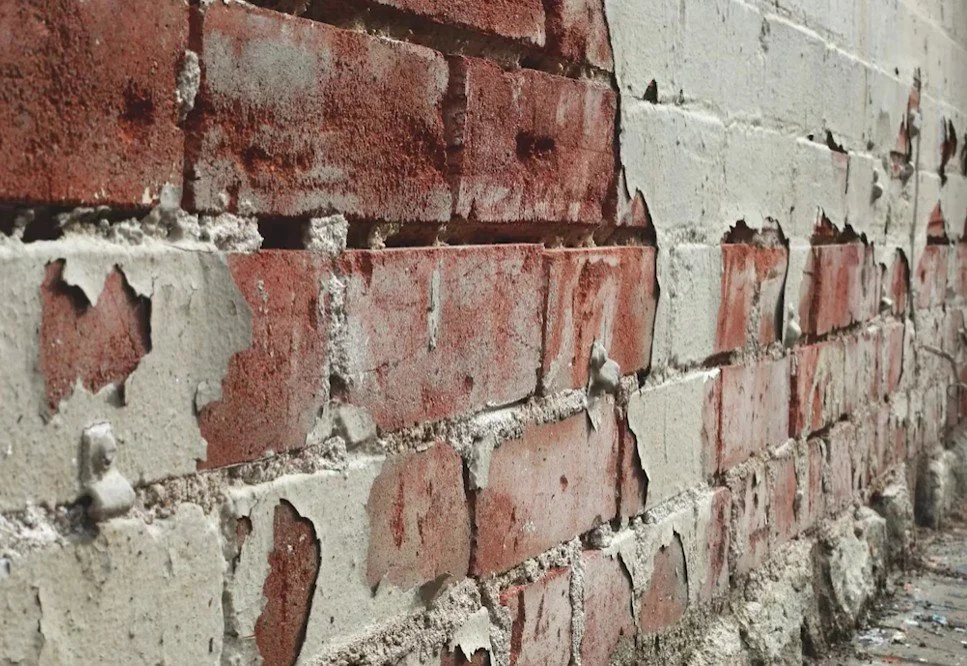
Figure 1. Paint peeling caused by moisture trapped in bricks by paint. Photo from Don “Mr. Brick” Foster.
Paint brightens and freshens a building, but if that building is built of brick or stone – leave it alone!
The common belief is that paint protects a building from harsh weather. This is true of wood and other materials, but not for masonry. If paint is applied to masonry, the building will need constant and costly maintenance. Left alone, masonry is nearly maintenance-free.
Most building materials are porous, including wood and masonry. However, there are distinct differences in how these materials react to moisture, primarily changes in humidity. Wood, especially new growth wood, “responds to moisture by swelling and shrinking…”[1] This causes the wood to warp and eventually fail. Painting seals the wood and prevents moisture from penetrating it.
Masonry, on the other hand, responds quite differently to moisture. Brick, limestone, etc, do not shrink or swell from moisture. Instead, masonry “breathes” moisture by letting it in and letting it back out[2]. Paint, as noted above, prevents moisture penetration. When applied to masonry, paint will seal moisture inside the masonry, preventing it from escaping. Worse is that the rapid deterioration of the masonry happens from the inside out and is not visible until it begins to break and crumble (see Figure 2).

Figure 2. Close-up of brick failure caused by paint. Photo from Don “Mr. Brick” Foster.
Painting masonry requires ongoing and extensive maintenance. According to “Mr. Brick,” Don Foster, once masonry is painted, “you may need to paint brick every three to five years.”[3] Painted masonry also needs to be regularly repaired (again, refer to Figure 2). Removing paint from masonry, while possible, is challenging and expensive. Without paint, masonry is nearly maintenance-free!
In addition to painted masonry creating a money pit for its owner, the aesthetic is ahistoric. The masonry of most historic buildings was not painted. In some cases, signs were painted on masonry, but otherwise, masonry was left “naked.” The aesthetic character of a masonry building is irreparably changed once paint is applied to it.
There are other ways to freshen or brighten masonry without paint. Surface-applied mortar, limewash, staining, and mineral paint can beautify masonry while still allowing it to “breathe.”
Despite common presumptions, even with professional painters, paint does not protect all building materials. Wood, yes. Masonry, NO!
Unfortunately, property owners are unaware of the ongoing expenses they agree to when choosing to paint masonry. This is why historic preservation commissions in the Tri-Cities and elsewhere are considering amendments to their ordinances that would require property owners to receive approval before painting masonry. The purpose is to help property owners protect their property and help extend the life of beautiful, fine-just-the-way-it-is historic masonry. Crumbling masonry caused by paint is unsightly and expensive to repair, which risks maintenance neglect and possibly demolition.
St. Charles has led the way with its historic preservation commission recommending text amendments to its ordinance that the Plan Commission approved on November 18, 2025. The Planning and Development Committee is expected to review the recommended text amendments in December 2025. If approved there, City Council will make the final vote. Geneva and Batavia will probably not be too far behind.
Thank you for reading! If this story interested, inspired, or informed you, please consider subscribing to our monthly e-newsletter so more of these stories come right to you
[1] Valerie Dorge and F. Carey Howlett, eds., Painted Wood: History and Conservation (Los Angeles: The J. Paul Getty Trust, 1998), 465.
[2] “The Do’s and Don’ts of Painting Brick,” The Brick Industry Association, accessed November 20, 2025, https://www.gobrick.com/resources/brick-news/post/the-do-s-and-don-ts-of-painting-brick.
[3] Don Foster, “Painted Brick Failures,” Don Foster Masonry Cosmetics, Inc., YouTube, 0:51, December 9, 2021, https://www.youtube.com/watch?v=yVTxgz7_YMc. See also, Don Foster, “Why You Should Not Paint Brick,” Masonry Advisory Council, October 2020, https://masonryadvisorycouncil.org/wp-content/uploads/2020/10/Staining-Brick-Masonry.pdf.