
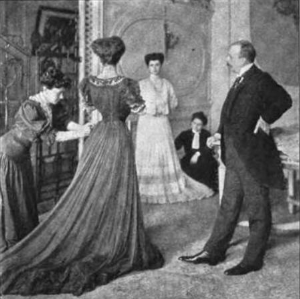
Figure 1. Doeuillet supervising a fitting, Everybodys Magazine, October 1905.
The premier fashion designers in the world in the late nineteenth and early twentieth centuries were in Paris. One of the trend-setters for fashion during that period was Georges Doeuillet.
Doeuillet’s fashion career began around 1895 when he was hired as a business manager for the maison (fashion house) of Callot Soeurs.[1] In 1899, Doeuillet opened his own maison at 18 Place Vendôme, an area of Paris considered the epicenter of luxury hotels and shops.[2] Many other fashion houses would soon join Doeuillet in Place Vendôme.
“Impeccable and Highly Refined Taste”
Quickly, Doeuillet became among the most well-known couturiers in Paris, “thanks to [his] impeccable and highly refined taste.”[3] In 1905, Everybody’s Magazine cheered that, “Elaborate confections are Doeuillet’s specialty, his prices are monumental, and his clientèle is made up from what one of his rivals has called ‘the swell mob,’ meaning the rich and extravagant as distinguished from the exclusive and chic.”[4] Others described his gowns as “quietly elegant” that were “eminently wearable and adapted to daily life, not theatrical effects.”[5] Profiles of Doeuillet were written in popular fashion magazines of the era, including Vogue, Notions and Fancy Goods, Theatre Magazine, and Gazette du Bon Ton.[6] France recognized Doeuillet as a fashion icon by naming him an officer of the Legion of Honor—similar to the Presidential Medal of Freedom in the U.S.—in 1911.[7]
Creator of the Cocktail Dress
Perhaps Doeuillet’s most well-known contribution to fashion was the creation of the cocktail dress. When the Théâtre Mogador opened in 1913, Doeuillet was hired to create the outfits for its first performance. Featured at this performance was a robe de style gown designed by Doeuillet, which later became known as the “cocktail dress.” Other couturiers such as Jeanne Lanvin, Boué Soeurs, Callot Soeurs, and Lucile also made their versions of the robe de style, but some sources credit Doeuillet as being the first.[8]
Nelle Fabyan’s Parisian Couture Gown
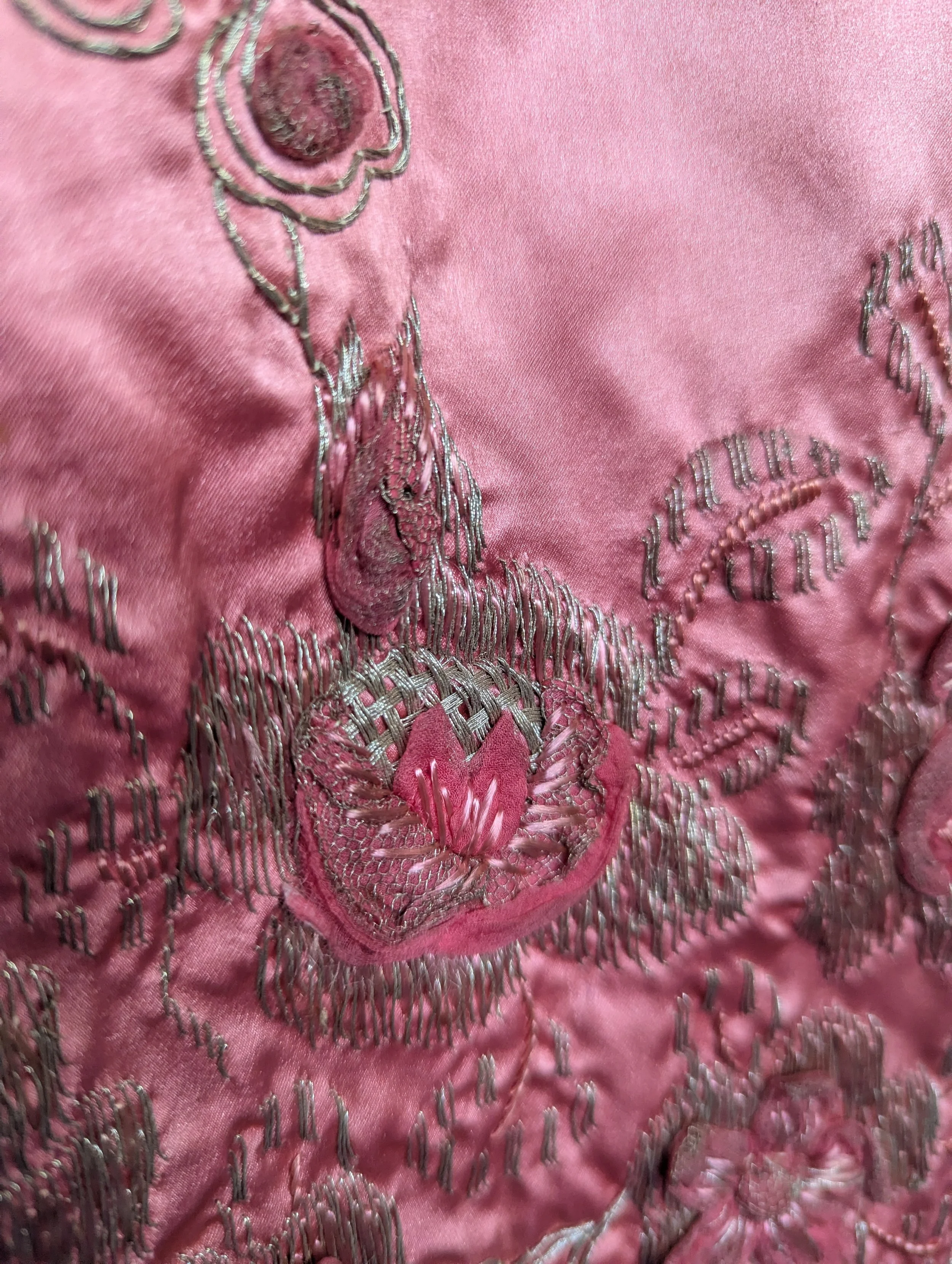
Figure 2. Close-up of Nelle Fabyan’s Parisian Couture Gown designed by Georges Doeuillet.
Nelle Fabyan was one of Doeuillet’s wealthy clients, purchasing one of his Parisian Couture Gowns likely around 1910. Nelle may have purchased it at a store in Chicago or New York or may have had the gown designed exclusively for her in Paris by Doeuillet. Nelle’s rose-colored silk satin gown includes exquisite silk and metallic thread embroidery, handmade rosettes along the neckline, and a slender bodice ending in a short train that would have accentuated the contours of her 4’10” frame. There is no record of which occasion(s) Nelle wore the gown, but she certainly would have attracted attention when she entered the room.
Before she died in 1939, Nelle gave or sold the gown to Ethyl-Marie Williams, the wife of one of the Fabyans’ chauffeurs, Bert Williams. The Williams family donated it to the Fabyan Villa Museum in 1987, and the Conservation Center of Chicago meticulously restored the gown in 2025.
Only six museums worldwide have in their collection a garment designed by Doeuillet:
· Louvre in Paris
· Metropolitan Museum of Art in New York
· Kyoto Costume Institute in Japan
· Alingsås Museum in Sweden
· Cincinnati Art Museum
· Fabyan Villa Museum in Geneva, Illinois.
When the Fabyan Villa Museum opens to the public on May 2, 2026, Nelle Fabyan’s Parisian Couture Gown will be the only garment designed by Georges Doeuillet on permanent display in the world.
Thank you for reading! If this story interested, inspired, or informed you, please consider subscribing to our monthly e-newsletter so more of these stories come right to you!
[1] Alexandre Vassiliev Foundation, “House of Doeuillet (French, 1900-1937),” accessed March 4, 2026, https://ns3103723.ip-145-239-9.eu/pawtucket/index.php/Detail/entities/3771.
[2] La Ville Lumiere (Paris: Direction et Administration, 1909), 76, https://books.google.com/books/about/La_Ville_lumi%C3%A8re.html?id=IIpDAQAAIAAJ.
[3] La Ville Lumiere, 77.
[4] Brainerd, Eleanor Hoyt Brainerd, “The Artist Dressmakers of Paris,” Everybody’s Magazine 13, no. 4 (October, 1905): 477, https://books.google.com/books?id=-WUXAQAAIAAJ.
[5] “Doeuillet,” Garment Manufacturers Index 2, no. 2 (September 1920): 29, https://books.google.com/books?id=nzs8AQAAMAAJ&dq=doeuillet&pg=RA1-PA29#v=onepage&q=doeuillet&f=false.
[6] Cassidy Percoco, “Georges Doeuillet (1865-1930?),” Mimic of Modes, October 22, 2014, accessed March 4, 2026, https://mimicofmodes.com/2014/10/22/georges-doeuillet-1865-1930/.
[7] Alexandre Vassiliev Foundation, “House of Doeuillet (French, 1900-1937).”
[8] Anrika Koperska, “Fashion Icon—Georges Camille Doeuillet,” Anrika i szafa gra, October 27, 2020, accessed March 31, 2026, https://anrikaiszafagra.pl/2020/10/wtorek-ikona-stylu-georges-camille-doeuillet.html.