
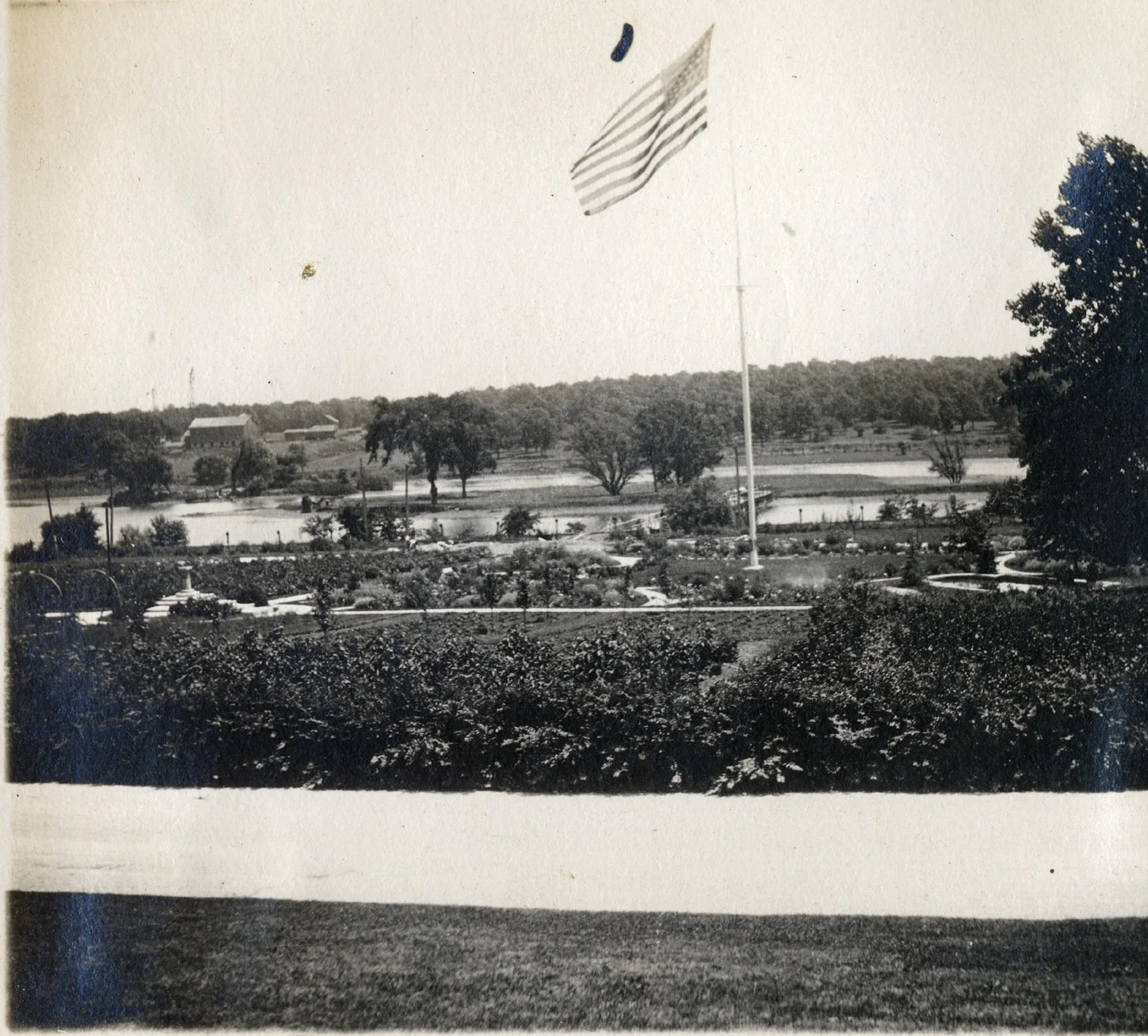
Figure 1. Giant flag that soared 110ft above Riverbank, the Fabyan Estate, c. 1920. Archives of Preservation Partners of the Fox Valley, St. Charles, IL.
An enormous American flag soared 110 feet above Colonel George Fabyan’s 245-acre estate, Riverbank, in Geneva, Ill., a western suburb of Chicago (Figure 1). Every morning from about 1907 until his death in 1936, the flag was raised while a bugler played reveille. Every night it was lowered at sunset with a small ceremony that included firing a small brass cannon, a bugler playing taps, and a ritual folding of the flag.[1]
To remind all who worked or visited Riverbank of the importance of being patriotic, the Colonel posted a sign near the flag that read, “Men passing here will please,” and then in all capital letters, “SALUTE THE FLAG” (Figure 2).
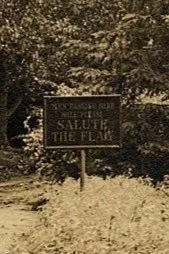
Figure 2. Sign near Fabyan’s flag, c. 1920. Archives of Preservation Partners of the Fox Valley, St. Charles, IL.
While his flag was a blaringly obvious demonstration of his patriotic fervor, Colonel Fabyan also showed his patriotism in many other, less visible ways.
AN HONORARY COLONEL
George Fabyan did not have the opportunity to serve in the military but did earn the rank of Colonel in 1901. He was one of thirty men selected for the military staff of the newly elected Illinois Governor Richard Yates Jr. and was granted the title of Colonel.[2] In March 1901, he accompanied Governor Yates to Washington, D.C., for the inauguration of President William McKinley and Vice President Theodore Roosevelt and met the President and Vice President, according to the Chicago Tribune.[3]
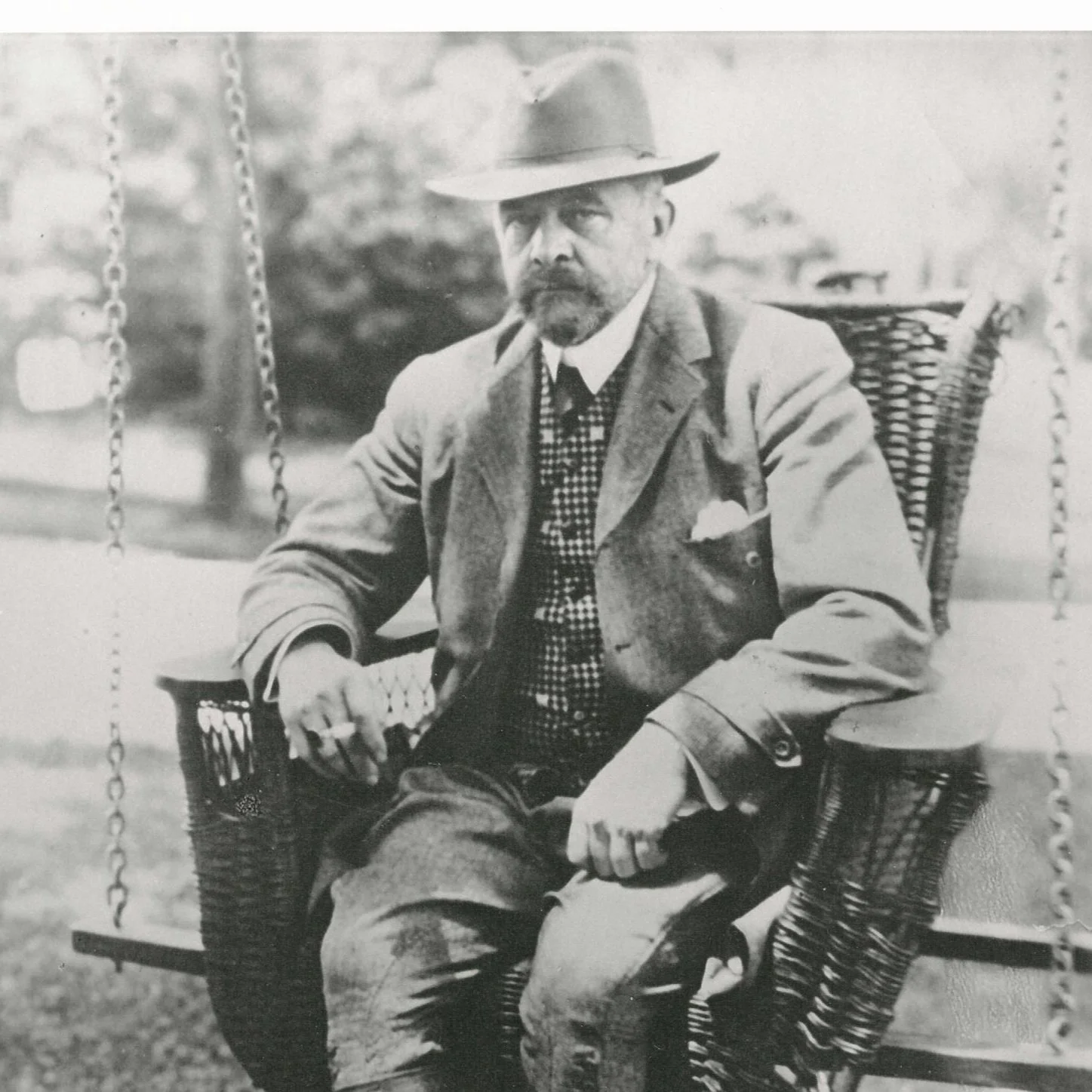
Figure 3. Colonel George Fabyan, c. 1920. Archives of Preservation Partners of the Fox Valley, St. Charles, IL.
DIPLOMACY
For much of his life, the Colonel served as an unofficial diplomat. His company, Bliss, Fabyan, and Company, did “export large quantities of goods to China, India, and Japan.”[4] This put him in contact with high-ranking government officials in those countries, particularly Japan.
Because of these business relationships, the Colonel often hosted Japanese dignitaries when they visited Chicago.[5] Perhaps the most notable event was when the Colonel hosted Japan's lead negotiator, Baron Komura, during a brief stop in Chicago on his way to treaty negotiations with Russia in Portsmouth, New Hampshire, in 1905.[6] President Theodore Roosevelt would win a Nobel Peace Prize for his role in negotiating the Treaty of Portsmouth. In 1908, Colonel Fabyan, in recognition of his “valuable services to Japanese officials during his long acquaintance with the government of Japan,” was awarded an emblem of the Order of the Rising Sun, an award similar to the United States’ Presidential Citizens Medal.[7]
MILITARY
Support for the military, however, was where the Colonel most flexed his patriotism.
When World War I began raging in Europe in 1914, the United States intended to remain neutral. Many, including Colonel Fabyan, believed the Americans would eventually join the fray to aid the British and French against the Germans. So, in 1916, the Colonel hired an army officer to begin providing military training to his male employees, perhaps as many as 60.[8] Immediately after the U.S. officially entered the war on April 6, 1917, the Colonel loaned his officer to “Kane County schools wishing to give military training to the boys.”[9] Geneva, Batavia, and St. Charles high schools enthusiastically took the Colonel’s offer, and these boys became known as the “Fox River Guard.”
WWI TRENCHES AT RIVERBANK
Trench warfare became the signature strategy of the Great War because of the deadliness of new weapons, especially the machine gun. Colonel Fabyan invited the “Fox River Guards” to his property to build trenches on May 18 and 19, 1917, for training.[10] The trenches were built on the northwest portion of his property, currently a housing development.
The Colonel also used these trenches as an attraction to rally people for the war effort, recruit men to volunteer for the Army, and raise money for the Red Cross.
On the evening of June 29, 1917, the Colonel hosted a rally to stir up support for the war effort and recruit men to volunteer for service in Europe. An estimated 1,600 people flooded his outdoor theater located near the west bank of the Fox River, lit by acetylene lights and adorned with the flags of Great Britain, France, and the United States, to hear rousing patriotic speeches.
Eleven days later, the Colonel hosted another recruiting rally. Capturing even more publicity, the Colonel attracted an estimated 5,000 people to Riverbank on the Sunday afternoon of July 8, 1917, to hear recruiting speeches and patriotic music, and take tours of his trenches. The Colonel charged 25 cents each to tour his trenches and donated all the money to the Red Cross. The Geneva Republican reported that the Red Cross raised a whopping $466, which is over $12,000 in today’s money, at the July 8 rally.[11] More than twenty men also volunteered for the army that day.
FABYAN SCOUTS
The Colonel was just getting warmed up.
“Fabyan, desirous of aiding his country, wished to organize and equip a regiment and send it to France, but this was contrary to government orders,” according to the Houston Daily Post.[12]
Since the Colonel could not raise his own regiment, he adopted one, the 6th Illinois Infantry, which was converted to the 123rd Field Artillery Regiment for World War One and sent to Camp Logan near Houston to prepare for war. Colonel Fabyan “supplied [the men] with everything that his ingenuity suggests they might use and appreciate. He has opened a substantial bank account for them. He has sent them books for a compact and complete library on military science and practice, as well as light reading and has subscribed for magazines for them. He has sent them sets of photographs illustrating the training of the soldier.” The paper went on to describe boxes “filled with eatables, readables and wearables,” the Colonel sent to them two to three times a week![13]
In recognition of the Colonel’s extreme generosity, the men named their mounted section the Fabyan Scouts.
CODEBREAKING
Colonel George Fabyan’s greatest contribution to the war effort, however, was codebreaking.
When the U.S. entered World War I in April of 1917, it quickly discovered it needed codebreakers. Years earlier, the Colonel opened a codebreaking school to teach people he hired cryptography so they could prove William Shakespeare was a fraud. The Baconian Theory, as it was known, posited that Sir Francis Bacon, a contemporary of Shakespeare, was the true author of the Shakespearean canon and had placed ciphers within the manuscripts revealing the “truth.” Colonel Fabyan’s Riverbank Department of Codes and Ciphers never found the Baconian cipher within Shakespeare, but they succeeded as the War Department’s codebreaking operation for the first six months of World War I and trained dozens of officers in codebreaking for the war effort. The codebreaking work started in Geneva would eventually lead to the founding of the National Security Agency.
Colonel George Fabyan was a multi-faceted man with a multitude of passions and the money to pursue them. Rather than spending his fortune on mansions, artwork, or travel, he spent much of it in service to his country. From his diplomacy as an unofficial American diplomat for the Empire of Japan, to his many efforts to support military training, rally patriotic support, and recruit men to serve for World War I, to his immensely valuable patronage of the science of codebreaking, Colonel Fabyan was, in many ways, a model for American patriotism.
And if anyone questioned his commitment to patriotism, he made sure to remind everyone to please SALUTE THE FLAG!
WANT TO LEARN MORE ABOUT COLONEL GEORGE FABYAN?
To learn more, plan a visit to the Fabyan Villa Museum, open on select days, May through September.
The Fabyan Villa Museum and Japanese Garden are operated by Preservation Partners of the Fox Valley through a contractual agreement with the Forest Preserve District of Kane County.
[1] Darlene Larson and Laura Hiebert, “The Fabyan Legacy,” in Geneva, Illinois: A History of Its Times and Places, ed. Julia M. Ehresmann (Geneva, IL: Geneva Public Library District, 1977), 164. See also, “Col. Fabyan Offers Aid to Military Classes,” Geneva Republican, April 8, 1917.
[2] “Yates Selects Military Staff,” Chicago Tribune, January 27, 1901.
[3] “Governor Yates Surprises Staff,” Chicago Tribune, March 7, 1901.
[4] “Bliss, Fabyan & Co.,” New York Daily Herald, January 30, 1897.
[5] “Japanese Off for the East,” Chicago Tribune, April 6, 1902; “Japanese Off for the East,” Chicago Tribune, April 6, 1902.
[6] “General Kuroki was Royally Entertained,” Geneva Republican, June 5, 1907; “Japanese Ambassador Visits Col. Fabyan,” Geneva Republican, October 11, 1916.
[7] “Chicagoan Honored by Ruler of Japan,” Chicago Daily Tribune, May 12, 1908.
[8] “Fours Right, Forward Men! Fabyan Army’s Marching,” Chicago Daily Tribune, January 25, 1916; “Col. Fabyan Offers Aid to Military Classes,” Geneva Republican, April 8, 1917.
[9] “Col. Fabyan Offers Aid to Military Classes,” Geneva Republican, April 8, 1917; “Military Training Geneva H.S. Boys,” Geneva Republican, April 11, 1917; “Town Talk: Doings of Interest Among Genevans,” Geneva Republican, May 5, 1917.
[10] “Fox River Guards Get Trench Veteran as Teacher,” Chicago Tribune, May 18, 1917.
[11] “Great Throngs at Recruiting Party,” Geneva Republican, July 11, 1917.
[12] “’Fabyan Scouts’ of the 123rd Heavy Artillery,” Houston Daily Post, October 22, 1917.
[13] “’Fabyan Scouts’ of the 123rd Heavy Artillery,” Houston Daily Post, October 22, 1917.